 TR
TR GB
GB RU
RU DE
DE AZ
AZ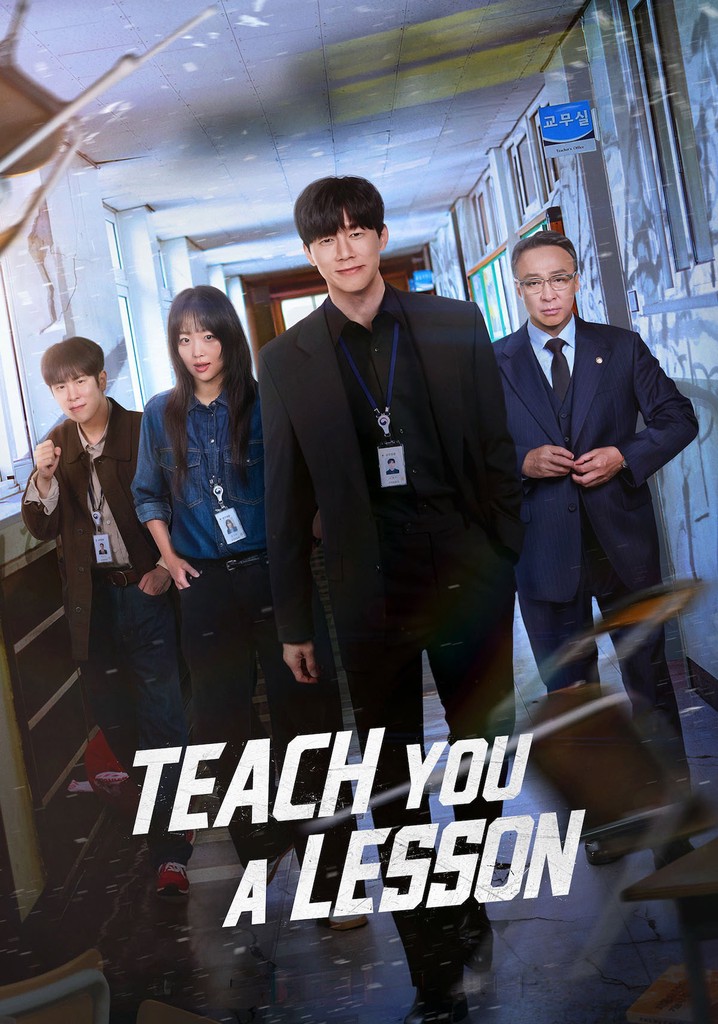
Film & Society · June 2026
Teach You a Lesson: It's Not the Education System That's Failing — It's Justice
Teach You a Lesson — and the question of whether a society can face its own reflection
For every teacher who has ever stood alone in a classroom.
I didn't notice the night passing. I looked at the screen — it was past midnight. I looked again — it was four in the morning. I watched Teach You a Lesson in a single breath: ten episodes, ten cases, ten times that tension rising and never quite resolving.
When I grew tired I wanted to stop, but the end of each episode pulled me into the next. It wasn't the action that did it. There were violent scenes, yes — when Kim Moo-yul walked in with a baseball bat you exhaled deeply in front of the screen. But that wasn't what kept you pinned to your seat. What kept you was recognising the same face again and again in every case. The parent, the administrator, the bureaucrat, the colleague who stayed silent. The story was set in Korean schools — but those faces were faces you had seen somewhere else before.
Analysis
Not a school series — a mirror
Released on Netflix on 5 June 2026, Teach You a Lesson is adapted from the popular Korean webtoon Get Schooled. Director Hong Jong-chan structures each episode as a self-contained case — peer bullying, cyberstalking, parental pressure, institutional corruption. Each case looks like a separate knot. But as the episodes accumulate, the viewer realises: these knots are part of the same rope. And that rope doesn't wrap around an education crisis. It wraps around something far larger.
— The parent defends their own interests.
— The school administrator protects their position.
— The politician calculates the votes.
— Institutions manage crises rather than produce justice.
And at the very centre of this cycle, the teacher stands alone — the person who carries the system's expectations while being the least protected by it.
The fifth episode is the heaviest. An elementary school teacher faces systematic harassment from a parent: calls that don't stop after hours, the exposure of her private life, a social media pile-on, complaint after complaint filed in sequence. Institutions don't move. Management stays silent. This case actually happened — in the Seoyi district of Seoul in 2023 — and in reality it ended far more tragically. In the series, intervention comes and the teacher is not left alone. When the viewer feels that difference, they cannot help but ask: In real life, who would have protected her?
Character Analysis
Na Hwa-jin: A solution, or the face of unsolvability?
Na Hwa-jin, played by Kim Moo-yul, is a former special forces operative turned education inspector — cool-headed, strategic, unafraid of physical intervention. And the viewer watches him and exhales: finally, someone is coming.
But that relief deserves to be questioned. What does it mean to present a figure who acts in the name of the state and uses violence as the symbol of justice?
A careful reading resists that framing. The series never presents Hwa-jin as a genuine solution. He is a symptom — someone filling the void that the system's decay created, but not closing that void. The series doesn't answer its own question. Deliberately. And that ambiguity is one of the work's most intelligent choices.
Social Critique
Why doesn't this exist elsewhere?
Watching the series, another question becomes unavoidable: why doesn't a production like this exist in other countries? The raw material is not missing. School bullying, teacher isolation, parental pressure, institutional decay — these are not uniquely Korean problems. Audiences in Turkey, in Brazil, in Japan, would recognise every face in every episode. Yet the content that could make that connection is rarely produced — and when it is, it rarely cuts this deep.
Structural reason: Large broadcasters operate under ratings pressure. Social criticism that directly targets state institutions can threaten advertising revenue and broadcast licences. Safe narratives are preferred over risk. This is less a deliberate act of censorship than an internalised reflex of the system.
Cultural reason: South Korea experienced the 2023 teacher's death as a public trauma — people talked about it, demanded accountability, took to the streets. The series speaks to that collective memory. In many other countries, similar events have occurred but without the same public reckoning forming around them. The same scenes, filmed elsewhere, would land differently.
Narrative reason: In many television traditions, anti-heroes eventually return to an internalised moral code or are punished. A figure left unresolved — who both uses the system and questions it — cannot be kept standing on screen for long. Teach You a Lesson refuses both exits. And that refusal is itself a brave narrative choice.
Hope
A model, a hope, and the importance of showing the way
But this much must also be said: these obstacles are not permanent. Teach You a Lesson offers us a model — not in content, but in courage. South Korea has done this before. Juvenile Justice, Squid Game, Parasite — each time proving the same thing: social criticism works, both artistically and commercially.
The producers, directors and writers capable of bringing this model to life exist in many countries. What is missing is not courage — it is the environment and the demand that would sustain it. And the audience is what creates that demand. Viewers who follow productions like Teach You a Lesson, who talk about them, who keep asking the questions they raise.
Because great changes begin this way: with someone refusing to stop asking the right question.
Will power prevail — or justice?
Teach You a Lesson asked this question in Korea.
It didn't answer it — it had the courage to ask.
Now it's our turn.